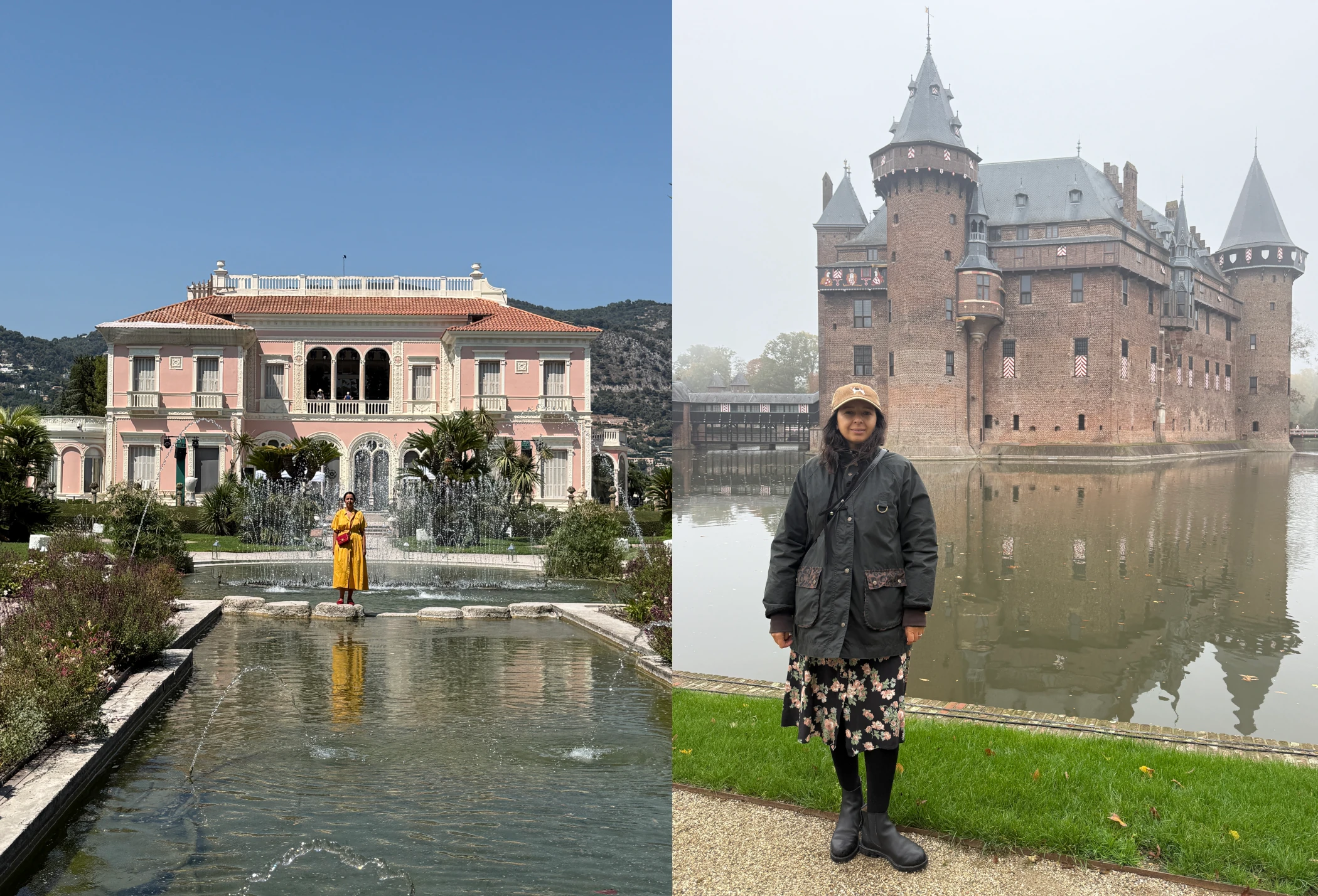
At the turn of the twentieth century, two women from one of Europe’s most famous banking families set out to create worlds of their own: Béatrice Ephrussi de Rothschild and her cousin, Hélène de Rothschild, Baroness van Zuylen. Having visited both of their vacation homes, I became curious about the women behind these magnificent residences. I wanted to discover who Béatrice and Hélène really were: their personal stories, passions, ambitions. Their lives were as fascinating as they were complex. This article is my way of sharing what I learned.
To better understand Béatrice and Hélène, let us take a brief look at their family history and genealogy. The Rothschild dynasty began in Frankfurt, Germany, in the late eighteenth century, when Mayer Amschel Rothschild established a banking business that would grow into one of Europe’s most influential financial empires. He sent his five sons to establish branches in the major financial centers of Europe: Frankfurt, Vienna, London, Naples and Paris.
It was his youngest son, James Mayer de Rothschild, who founded the French branch of the family. Arriving in Paris in 1812, James went on to establish a highly successful banking house. Together with his wife, Betty von Rothschild, he built an extraordinary fortune and became a leading figure in French society. Their passion for art and architecture would shape the lives of generations to come.
James and Betty had five children: Charlotte, Alphonse, Gustave, Salomon and Edmond. Each made their own mark on the family’s legacy. Two of their sons, Alphonse and Salomon, would become particularly important to the story of their descendants: Alphonse was the father of Béatrice, and Salomon the father of Hélène.
Béatrice Ephrussi de Rothschild
Béatrice Ephrussi de Rothschild was born in 1864 in the magnificent Hôtel Talleyrand on Rue Saint-Florentin in Paris. Her Jewish heritage was an important part of her family identity and social circle, where marriages often brought together wealthy Jewish dynasties. In June 1883, at just nineteen, she married Maurice Ephrussi, a banker of Russian Jewish origin, fifteen years her senior and a friend of her parents. Their wedding took place at the magnificent synagogue on Rue de la Victoire in Paris.
The marriage, however, soon turned sour. Maurice was unfaithful and transmitted syphilis to Béatrice, leaving her unable to have children. His gambling habits and mounting debts further strained their relationship. By 1904, his debts had reportedly exceeded twelve million gold francs, prompting the Rothschild family to intervene to protect Béatrice’s interests. After twenty-one years together, the couple separated in June 1904.
A year later, Béatrice’s father, Baron Alphonse de Rothschild, died. His death marked another turning point in her life. Her inheritance gave her total financial independence and gave her the opportunity to create a world entirely of her own.
In 1905, while exploring the French Riviera, she discovered the beautiful peninsula of Saint-Jean-Cap-Ferrat and immediately fell in love with it. With its spectacular views over the Mediterranean, she saw the perfect setting for her dream home. After years in an unhappy marriage and a life shaped by family expectations, she had found something she had long been missing: the freedom to shape her own surroundings and live according to her own tastes.
She set about transforming this wild stretch of coastline into her own little paradise. Construction began in 1907. Béatrice wanted a villa inspired by the grand Italian Renaissance palaces with a touch of Mediterranean charm. Her vision was also influenced by childhood memories of her grandfather’s magnificent Château de Ferrières, built by James Mayer de Rothschild outside Paris. Growing up, she had admired its spectacular central hall, impressive balcony, paintings and sculptures, as well as its lavish reception rooms, fine furniture and beautifully landscaped gardens. Now, at Cap-Ferrat, she created a magnificent central hall of her own, surrounded by elegant reception rooms and filled with works of art and precious objects. It was almost as though she were bringing a little of her grandfather’s world to the Riviera, while giving her own personality room to flourish.
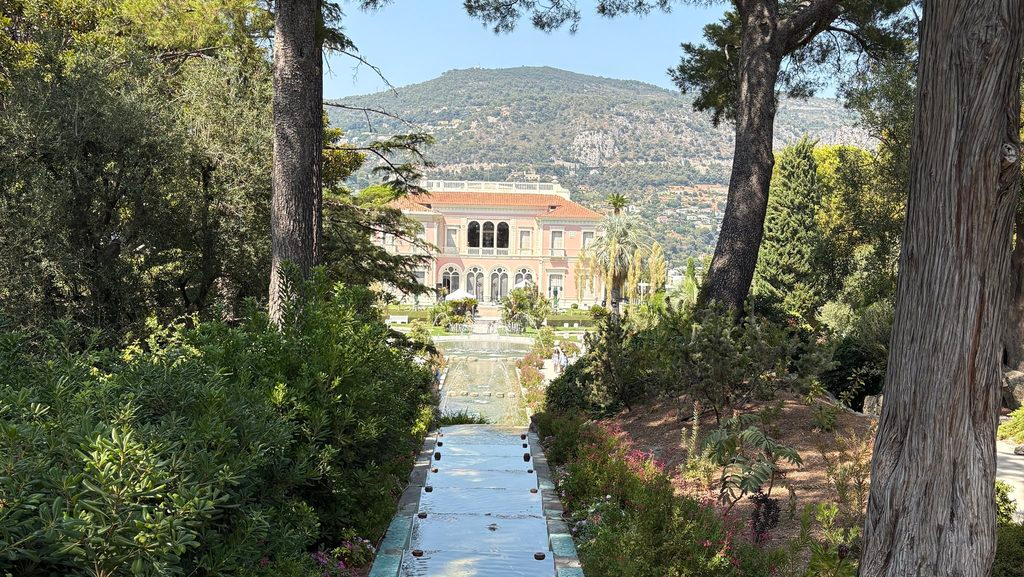
Béatrice was a woman of strong tastes and a wonderfully extravagant imagination. She personally supervised the construction of her villa, studying plans and even using life-size models to make sure every detail was exactly as she wanted. When planning the French garden, she reportedly had her staff use cardboard pyramids to represent the cypress trees and strips of colored fabric to mark out the ponds, paths and flowerbeds. She was equally particular about her surroundings: pink became her signature color, appearing in her clothes, flowers and eventually the villa itself. She also kept an extraordinary collection of animals, including monkeys, gazelles, flamingos and exotic birds.
Despite her love of the past, Béatrice was also modern. Behind the villa’s Renaissance-inspired façade, she embraced modern building techniques and materials, including reinforced concrete. She also wanted all the latest comforts of the early twentieth century, from electricity and central heating to a lift and was among the first people to have a telephone line on Cap Ferrat, with the number I-66.
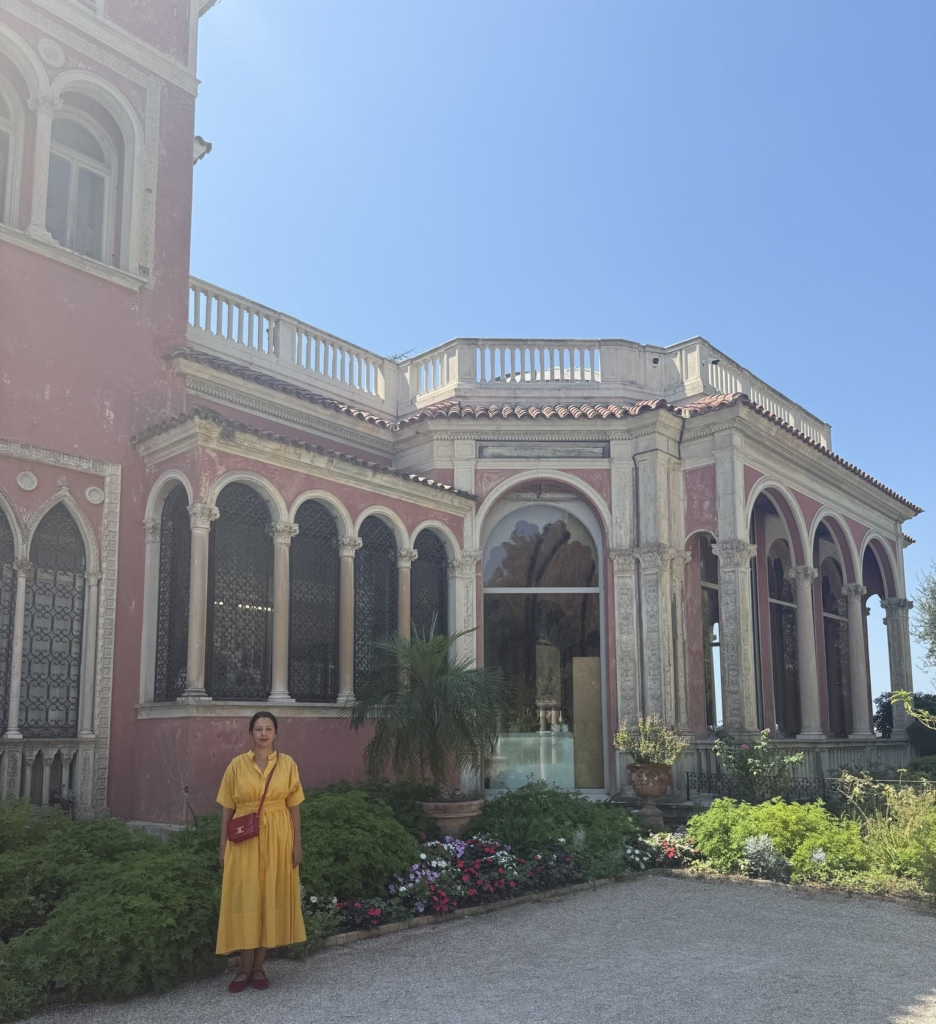
More than simply a grand residence, the villa became a reflection of Béatrice herself: her curiosity, her extravagant tastes, her love of beauty and her determination to do things her own way. After years of living within the expectations of family and marriage, she had finally created a place where she could be entirely herself. And she certainly made the most of it. Béatrice Ephrussi de Rothschild died of tuberculosis on 7 April 1934, aged 69, in Davos, Switzerland. In her will, she left her beloved villa, gardens and art collections to the Académie des Beaux-Arts, in memory of her father, with the wish that it became a museum.
Hélène de Rothschild, Baroness van Zuylen
Over a thousand kilometers to the north, her first cousin Hélène de Rothschild was also forging her own path towards independence. Born in Paris in 1863, a year before Béatrice, Hélène grew up surrounded by extraordinary wealth, art and privilege. Her father, Baron Salomon James de Rothschild, died when she was still a baby, and she was raised by her mother, Adèle, with the support of her uncle, Alphonse de Rothschild (Béatrice’s father). Her childhood was spent in the family’s magnificent Paris residence, the Hôtel Salomon de Rothschild at 11 rue Berryer. It was a world of great luxury, but also one governed by family traditions, strict rules and expectations.
One evening in 1886, at a masked ball in Paris, Hélène met Étienne, who was dressed as Hercules. The muscular hero made quite an impression on the young Hélène. Étienne offered Hélène a way to escape the future that had been mapped out for her. Her mother had hoped her daughter would marry within the Rothschild circle. Hélène came from one of Europe’s most prominent Jewish banking families, while Étienne belonged to an old, though no longer wealthy, Catholic aristocratic family. By choosing Etienne, she was choosing more than a husband: she was taking her first steps towards a life of her own, even if it meant going against her mother’s wishes. The marriage was met with disapproval on both sides. Hélène converted to Catholicism but ensured that her marriage contract protected her financial and legal independence. At a time when married women had very limited control over their own affairs, she retained her legal capacity and agreed to provide for her husband’s expenses.
Through her marriage, Hélène became connected to Kasteel de Haar, the ancestral home of the Van Zuylen family near Utrecht in the Netherlands. Étienne inherited the estate in 1890, damaged by centuries of neglect, storms and conflict. Rather than leave it to crumble, the couple commissioned the celebrated Dutch architect Pierre Cuypers, best known for designing Amsterdam’s Rijksmuseum and Central Station, to bring the castle back to life. The rebuilding began in 1892 and would take around twenty years to complete.
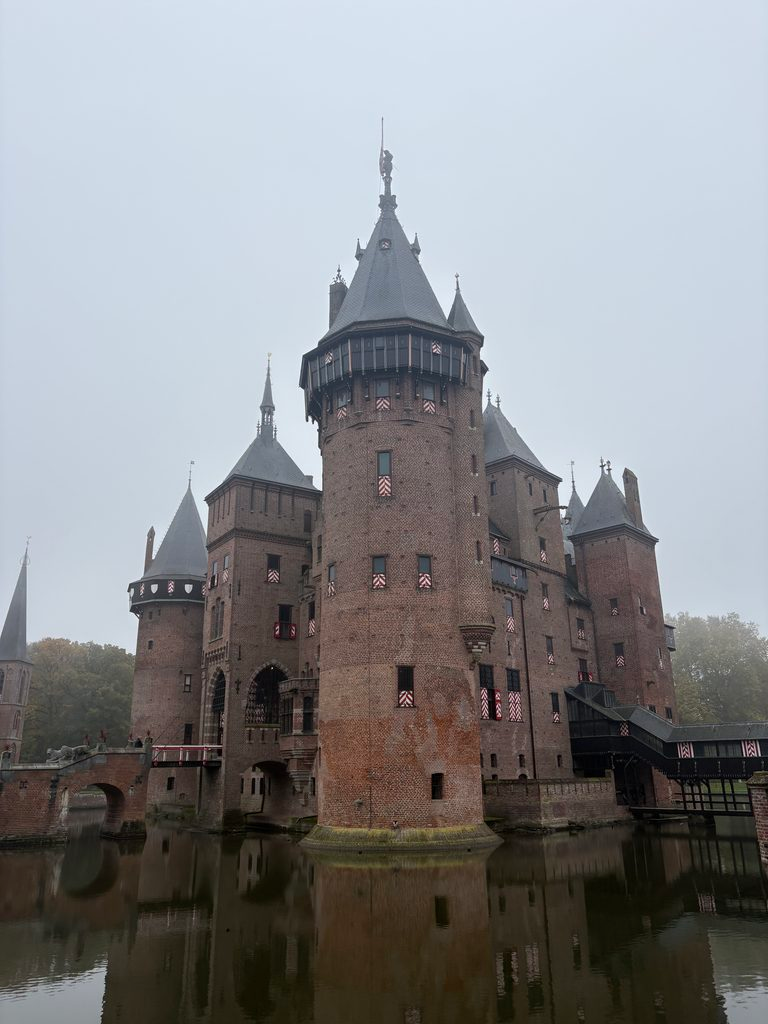
The result was extraordinary. Rising from the Dutch countryside with its towers, turrets, pointed roofs, drawbridges and moat, De Haar looked like something straight out of a fairy tale. Cuypers gave it a dramatic Neo-Gothic appearance, but inside, the castle was a very different story. Here, the Rothschild taste for luxury and comfort took over. Like Béatrice, Hélène created a magnificent central hall of her own, reminiscent of the one she had admired at Château de Ferrières, surrounded by elegant reception rooms and filled with works of art and precious objects. The rooms were filled with rich fabrics, carved wood, elaborate ceilings, antiques and beautiful works of art. Medieval inspiration was mixed with Renaissance, Baroque and eighteenth-century French styles, creating an eclectic interior that was unmistakably grand.
Hélène also helped bring the castle into the modern age. Alongside its medieval appearance and richly decorated interiors, De Haar was fitted with hot and cold running water, central heating, electric lighting, a Turkish bath, a modern kitchen and a passenger lift. It combined the charm of an old castle with all the comforts of a luxurious modern home.
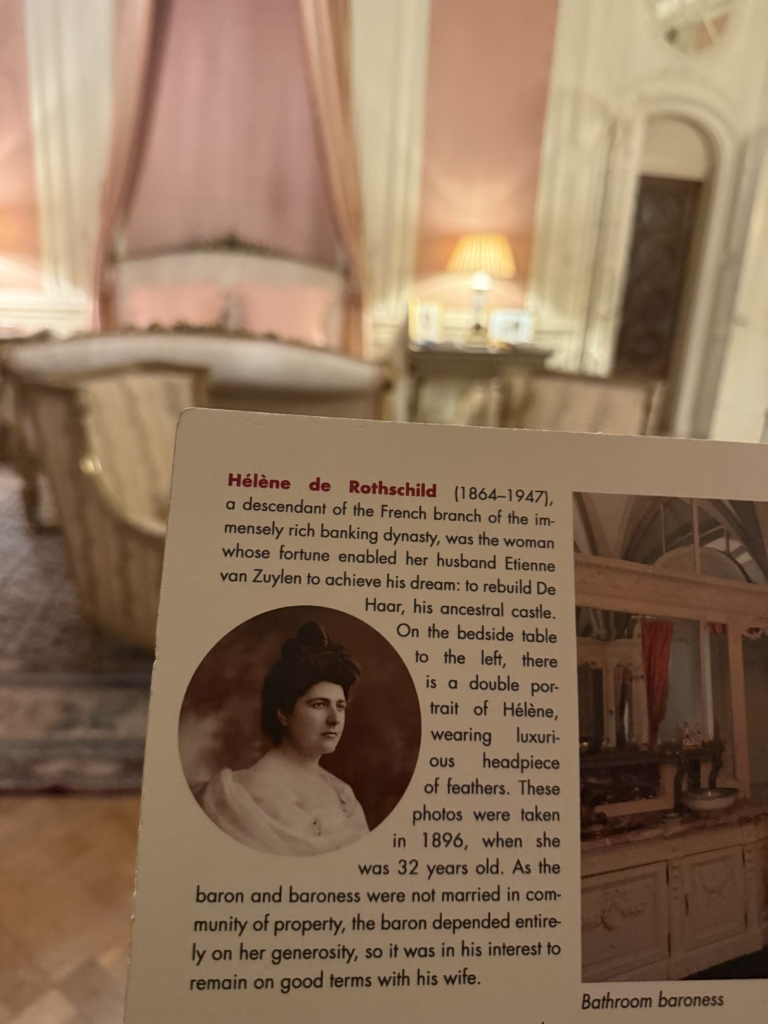
Hélène helped shape the interiors of the castle, bringing her own taste and family influences into the house. Like her parents, Adèle and Salomon de Rothschild, who had assembled an extraordinary collection of art and antiquities, including Chinese jade, porcelain, Renaissance sculpture, rare books and Oriental objects displayed in their magnificent Parisian residence on rue Berryer, Hélène and her husband also developed a passion for collecting furniture, art and antiques during their travels. Their journeys took them to Egypt, India, Japan and the Dutch East Indies, and many of the treasures they brought back found their way into the castle, giving it the character of a great European family home filled with objects gathered from around the world. The couple even planned to establish a small zoo on the estate, bringing back animals from their travels. Hélène’s Rothschild heritage was also reflected in the decoration, with the family coat of arms and Stars of David appearing throughout the castle alongside the symbols of the Van Zuylen family.
Hélène was not simply a wealthy baroness presiding over a grand country estate. She was adventurous, independent and fascinated by modern life. She shared her husband’s enthusiasm for automobiles and became one of the earliest women to take part in motor racing. In 1898, she competed in the Paris-Amsterdam-Paris race, using the pseudonym “Snail”. At a time when it was still unusual for women to drive, let alone compete in a race, this was quite a remarkable achievement. She also had a literary side, writing novels, poems, short stories and plays, and became part of the lively literary circles of Paris. She hosted a salon and collaborated on writing with the poet Renée Vivien under the pseudonym Paule Riversdale.
Sadly, Hélène’s life was not without tragedy. In 1912, her eldest son, Hélin, died in a car accident while travelling to De Haar for Christmas. He was only twenty-four. The loss devastated her, and she gradually withdrew from the castle, spending much less time there. Although she and Étienne continued to entertain together, they increasingly led separate lives. After Étienne’s death in 1934, their younger son Egmont inherited the estate and continued the family tradition of welcoming guests to De Haar.
Hélène’s later years were marked by the upheaval of the Second World War. As a member of the Rothschild family, she was particularly vulnerable when the Nazis occupied France. She escaped to Portugal and then to New York, where she spent the war years before eventually settling in Lisbon where she died in 1947.
Béatrice created her own little paradise on the Riviera, while Hélène helped bring an old family castle back to life in the Netherlands. Although their lives took different paths, both women were determined to make their own choices and live life on their own terms. Behind the beauty of Villa Ephrussi and the fairy-tale appearance of De Haar lie the stories of two women who wanted to shape their own destinies.
So, the next time you find yourself on the French Riviera or near Amsterdam, I highly recommend taking the time to visit Villa Ephrussi de Rothschild and Kasteel de Haar. Beyond their beautiful interiors and gardens, both places offer a glimpse into the lives of the remarkable women who helped shape them. I hope their stories will continue to be discovered, shared and remembered for generations to come.